
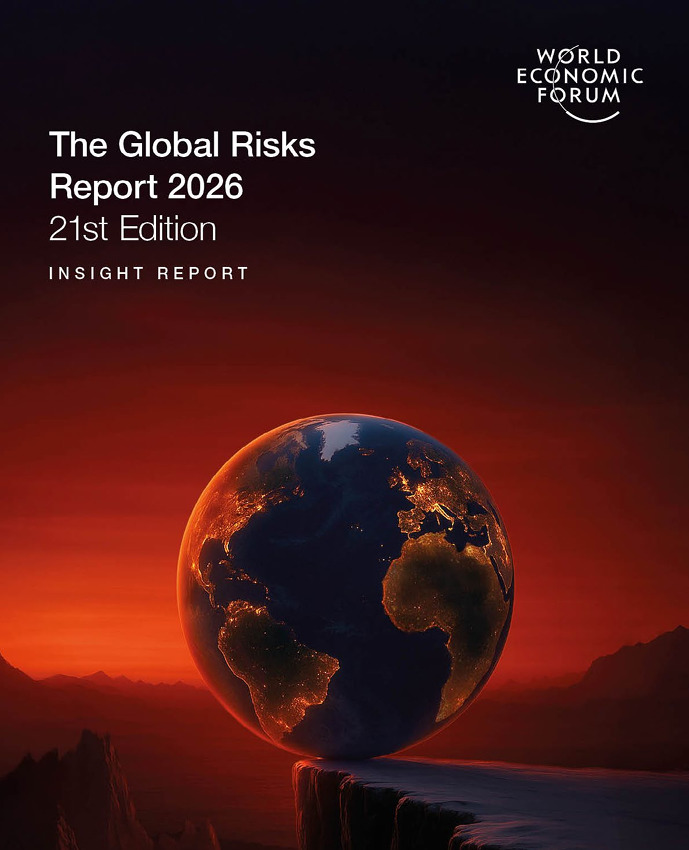
The World Economic Forum’s Global Risks Report 2026 paints a picture of a world defined less by single shocks and more by overlapping pressures. Economic uncertainty, rapid technological change, social strain and long-term environmental risks are no longer unfolding in isolation. They are interacting, reinforcing one another, creating a policrise, and testing the capacity of institutions to respond. For senior leaders in finance ministries, treasuries and central budget authorities, this context is reshaping how public financial management supports fiscal stability and public trust.
At its core, the report highlights a growing gap between the speed at which risks are evolving and the ability of existing institutions and systems to manage them. For public finance leaders, this gap shows up most clearly in the growing volatility of fiscal assumptions. Revenue projections are harder to anchor, expenditure pressures are less predictable, and the margin for error is shrinking. What once felt like external disruptions increasingly translate into direct fiscal consequences.
Fiscal credibility and public financial management
One of the strongest messages in the report is the renewed prominence of economic risk. Concerns about debt sustainability, inflation and financial instability have risen sharply compared with recent years. For finance ministries, this reinforces the importance of disciplined fiscal frameworks and strong budget execution.
When fiscal space is limited, credibility becomes a strategic asset. Transparent public budgets, realistic forecasting and reliable financial reporting play a critical role in maintaining confidence, both with markets and with citizens. In uncertain conditions, how governments manage public resources can matter as much as the policies they pursue.
Inequality, budgeting and the social contract
The report also draws attention to inequality as a powerful risk multiplier. It is described as the most interconnected global risk, influencing social stability, political trust and the effectiveness of public policy. From a public financial management perspective, this places additional weight on the quality of budget decisions and how effectively they are translated into real-world outcomes.
When public budgets fail to deliver visible improvements in services or protection, trust erodes quickly. Conversely, credible execution and results-focused spending can help reinforce the social contract, even in difficult fiscal conditions. Public financial management systems like the FreeBalance Accountability Suite™ sit at the centre of this relationship between governments and citizens.
Climate risk and long-term fiscal exposure
Environmental risks feature prominently in the longer-term outlook, even if they appear less urgent in the immediate horizon. Extreme weather events, infrastructure stress and environmental degradation all carry fiscal implications, often in the form of unplanned expenditures and growing contingent liabilities.
For finance ministries, this underscores the need to treat climate risk and resiliência as part of mainstream fiscal planning. Capital budgeting, asset management and fiscal risk statements are increasingly important tools for understanding long-term exposure and managing costs over time, rather than responding only once pressures materialize.
Digital transformation, technology risk and PFM systems
Technology is another theme that cuts across the report. Digital transformation is creating opportunities to improve efficiency, transparency and decision-making, but it also introduces new risks. Cybersecurity, data integrity and the responsible use of advanced analytics are no longer peripheral concerns.
Core public financial management systems form part of national critical infrastructure. Their resilience is essential to maintaining continuity in treasury operations, payments, payroll and revenue collection. As governments explore greater use of automation and inteligência artificial, finance leaders are increasingly required to balance innovation with strong governance, auditability and control.
Building fiscal resilience through public financial management
Underlying all of this is a broader message about institutional capacity. The report emphasizes that uncertainty is no longer episodic. It is structural. In this environment, public financial management needs to support faster, more informed decision-making while maintaining accountability and discipline.
Static budgeting approaches and fragmented financial information make it harder to respond effectively when conditions change. Integrated and interoperable public financial management systems provide a stronger foundation for navigating complexity, supporting fiscal resilience and improving decision-making under pressure.
A core capability for uncertain times
While the Global Risks Report 2026 does not offer prescriptive solutions, it points clearly toward the importance of resilience. For senior government finance leaders, resilience is built through strong institutions, credible fiscal processes and modern digital foundations. It is reinforced by transparency, by the ability to identify risks early, and by confidence that public resources are being managed responsibly.
To find out more about how FreeBalance’s experience in 30 countries could support your organization, Entre em contato conosco.