
Public financial management (PFM) professionals around the world are increasingly focused on maximizing domestic resource mobilization and ensuring fiscal resilience. However, high-quality regulations alone are not enough to protect public funds from evolving threats; the true “integrity advantage” comes from effective implementation in practice.
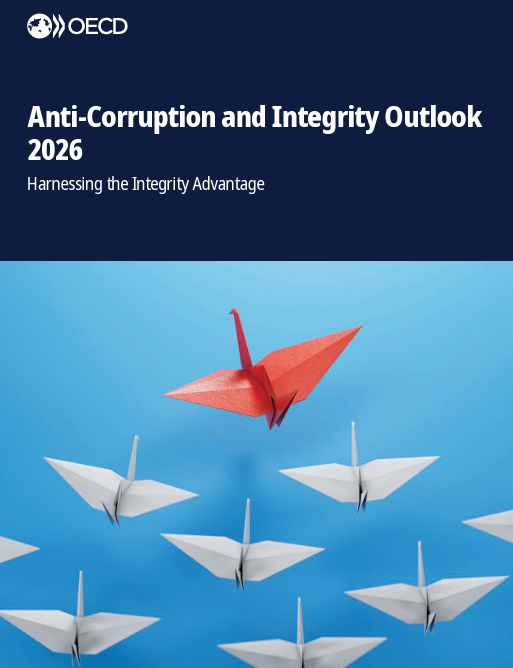
Les OECD Anti-Corruption and Integrity Outlook 2026 highlights a persistent challenge for governments worldwide: the implementation gap. While legal frameworks are improving, there remains a 19-percentage point gap between having regulations and following them. For senior leaders in developing economies, closing this gap is a strategic priority for economic growth and public trust.
The Economic Case for Integrity and Fiscal Oversight
Integrity is a strategic asset that attracts foreign direct investment and prevents the loss of critical resources. The OECD report provides clear evidence that investing in robust oversight systems pays off:
- Countries with lower levels of corruption are estimated to collect approximately 4% more of their GDP in tax revenue.
- Public, private, and non-profit organizations lose an estimated 5% of their revenue to occupational fraud annually, totaling roughly $5 trillion USD globally.
- Procurement mismanagement and corruption can cost governments between 8% and 25% of global public investment each year.
Strategies for Digital Transformation and Risk-Based PFM
Traditional PFM models often rely on a reactive approach where authorities investigate fraud only after the money has been lost, but our experience suggests there are three key focus areas for modernizing financial oversight, and these are backed up by the OECD’s new analysis:
1. Leveraging GovTech and Data Analytics
Digital technologies, including artificial intelligence and machine learning, are becoming vital tools for identifying outliers and behavioral patterns that warrant investigation. These tools can assist in everything from fraud detection to the verification of interest and asset disclosures. Ensuring system interoperability across different government agencies is a prerequisite for success.
2. Professionalizing the Internal Audit Workforce
The human element of financial oversight is essential. The report notes that in half of OECD countries, supervisory bodies for political financing lack certified auditors on their payroll. Trained auditors who adhere to international standards improve the resilience of institutions against undue influence, and therefore renforcement des capacités within government institutions is a priority.
3. Strengthening Internal Controls
Strong internal controls ensure that public resources are used for their intended purpose. While most countries have basic guidelines, only a small number of countries consistently use risk assessments across all ministries and central agencies. Moving from a rules-based approach to a risk-based approach allows financial managers to focus limited resources on the areas of highest risk.
Building Long-Term Institutional Resilience
The OECD Anti-Corruption and Integrity Outlook 2026 serves as a reminder that integrity systems protect democracies and support fair competition. Ensuring that institutions have the capacity, the data, and the professional staff to put existing regulations into practice is a key factor in protecting public resources and build lasting trust.
To find out more about how the FreeBalance Accountability Suite™ helps governments to combat corruption, increase accountability and bolster citizen trust, contact our Experts en GFP.