
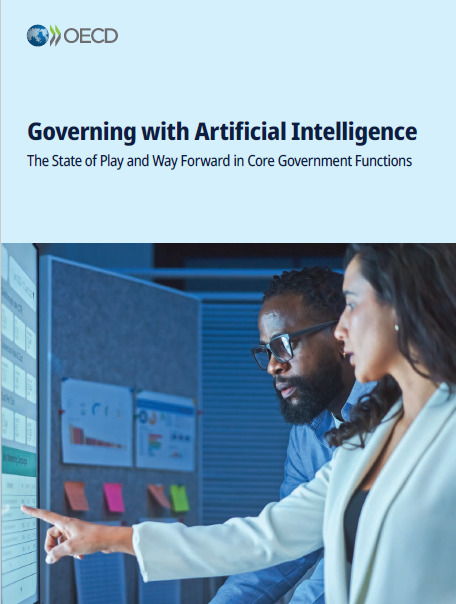
The potential for artificial intelligence (AI) to transform public administration is a primary focus for senior government leaders globally. However, a new OECD report, Governing with Artificial Intelligence, reveals that government adoption currently trails the private sector. A major reason for this lag is that many administrations attempt to layer 21st-century intelligence on top of 20th-century digital foundations.
For finance ministries, transitioning from exploratory pilots to systemic implementation requires a strategic modernization of the integrated financial management information systems (IFMIS) that provide the data AI needs to function. Successful adoption builds upon previous digital advancements and supports the comprehensive rethinking of public finance processes.
Overcoming Integration Debt in Public Finance
A critical challenge identified by the OECD is automation bias, which is the tendency for users to trust automated outputs without sufficient scrutiny. In a fiscal context, this risk is magnified if the underlying data is flawed. The OECD analysis points out that an abundance of data does not necessarily equate to AI-ready data.
Many governments suffer from integration debt where budget data remains trapped in fragmented, decade-old IFMIS. AI systems cannot effectively access the high-quality, real-time datasets required for accurate forecasting in these environments. Before a finance ministry can benefit from AI “nowcasting,” it must first achieve a single source of truth. Success in this area is not a simple software procurement challenge. It is a fundamental data governance and systems integration challenge.
AI as a Strategic Advisor for Fiscal Governance
The most effective role for AI in public financial management is as an advisor that augments human decision-making through better macrofiscal forecasting and real-time risk assessment. These applications include:
- Macrofiscal nowcasting: Processing real-time economic data to identify emerging trends faster than traditional time-series models
- Intelligent anomaly detection: Identifying hidden patterns of financial leakage, fraud, or improper transactions that warrant human investigation
- Predictive budget monitoring: Simulating the long-term fiscal impact of policy decisions before they are implemented.
FreeBalance supports this advisor model by providing a unified Government Resource Planning (GRP) infrastructure that integrates performance indicators directly into the budget cycle. This ensures that the insights generated by AI are based on verified, audit-ready data instead of opaque assumptions.
A Roadmap for Human Augmentation
At FreeBalance, we advocate for a human augmentation approach that keeps humans in the loop to leverage the strengths of both AI and human expertise. By automating routine, low-value tasks, governments can elevate the role of public servants to focus on mission-critical activities.
To reach this state of maturity, in 2025 we co-created an AI roadmap focused on “public finance for good” with delegates from our customer countries at the FreeBalance International Steering Committee. The roadmap is defined by three key pillars:
- Open system architecture: Recognizing the dynamic nature of AI, an open platform reduces vendor lock-in and supports integration with various AI engines, whether on-premises or in the public cloud
- PFM-specific models: Developing small language models and tuned machine learning embedded within existing workflows ensures that AI understands the unique regulatory constraints of government finance
- Customer-driven innovation: Emphasizing collaboration and the sharing of lessons learned among governments allows for a stepwise approach to building institutional literacy.
Addressing the Risk of Inaction
A compelling finding in the OECD report is the risk of inaction. Governments that delay digital modernization relegate themselves to being technology takers instead of option shapers. This delay widens the capacity gap between the public and private sectors.
Achieving fiscal resilience in the digital age depends on the quality of the digital foundation. By prioritizing integrated GRP systems, senior government leaders ensure their administrations are ready to move from basic accounting to high-impact fiscal stewardship tomorrow.
Para saber mais sobre o FreeBalance Accountability Suite™ and how it can support your organization, contactar um dos nossos especialistas em GFP.