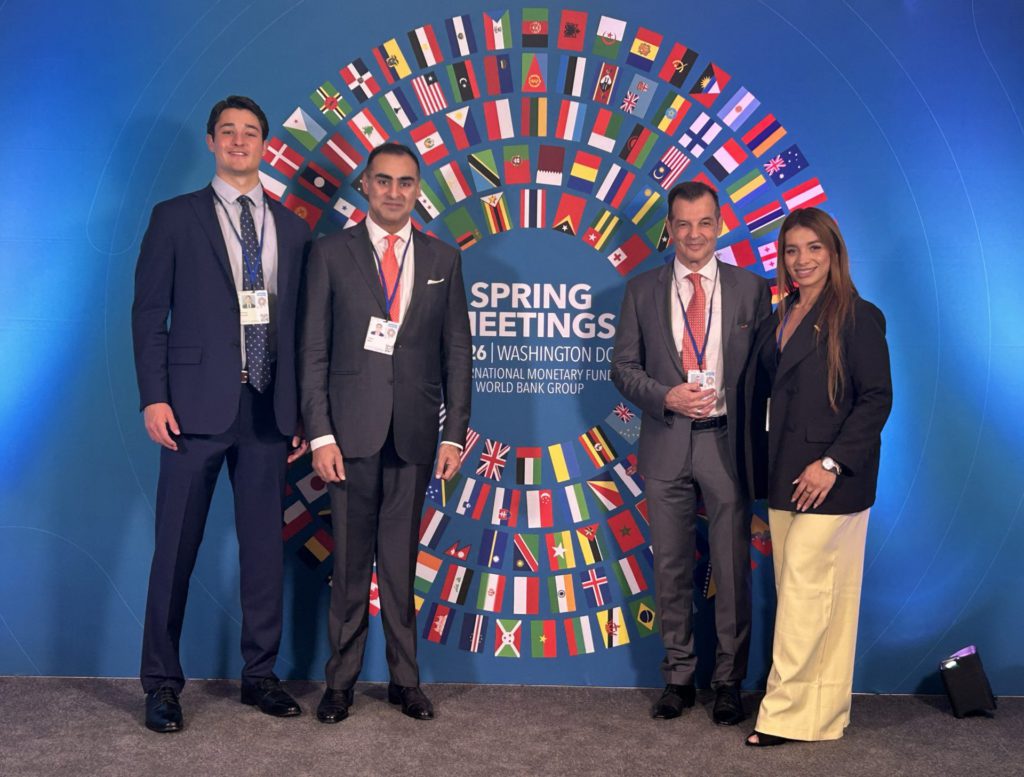
Global headlines about the 2026 Spring Meetings of the International Monetary Fund (IMF) and the World Bank Group (held this month in Washington, D.C.) focused on debt recovery and private sector mobilisation. But our delegation engaged on the ground with Finance Ministers and senior officials from the Caribbean, Africa, Europe, and the Pacific, and noticed a significant shift in the global narrative.
Our delegation was led by President and CEO Manuel Schiappa Pietra, alongside Doug Hadden (Executive Vice President of Strategy and Innovation), Taimur Malik (Director of International Business), Parker Farnell (Regional Sales Manager), and Valeria Reinoso (Strategic Communication Assistant). Through engagements with Finance Ministers and senior officials from the Caribbean, Africa, Europe, and the Pacific, it became clear that governments are no longer looking for “band-aid” fixes to stabilize current crises. Instead, they are focused on building resilient, national digital backbones that can withstand the disruptive technological shifts already appearing on the horizon, such as artificial intelligence (AI) and quantum computing.
From Fragmentation to a “Single Source of Truth”
A recurring theme across our discussions with nations was the exhaustion caused by fragmented legacy systems. For years, many governments have operated with “islands of information”, and these siloed data environments prevent a clear, real-time view of national finances.
Based on our discussions, integration is no longer a luxury; it is a prerequisite for fiscal agility. Governments are actively moving away from siloed architectures toward integrated public financial management (PFM) platforms. There is an increasing demand for systems that function as a “single source of truth” at the centre of government operations, ensuring that data is captured once and remains available to all stakeholders. And the ministers we spoke with emphasized that they can no longer rely on quarterly reports to make informed decisions; they require real-time visibility to execute policy effectively in a fast-moving global economy.
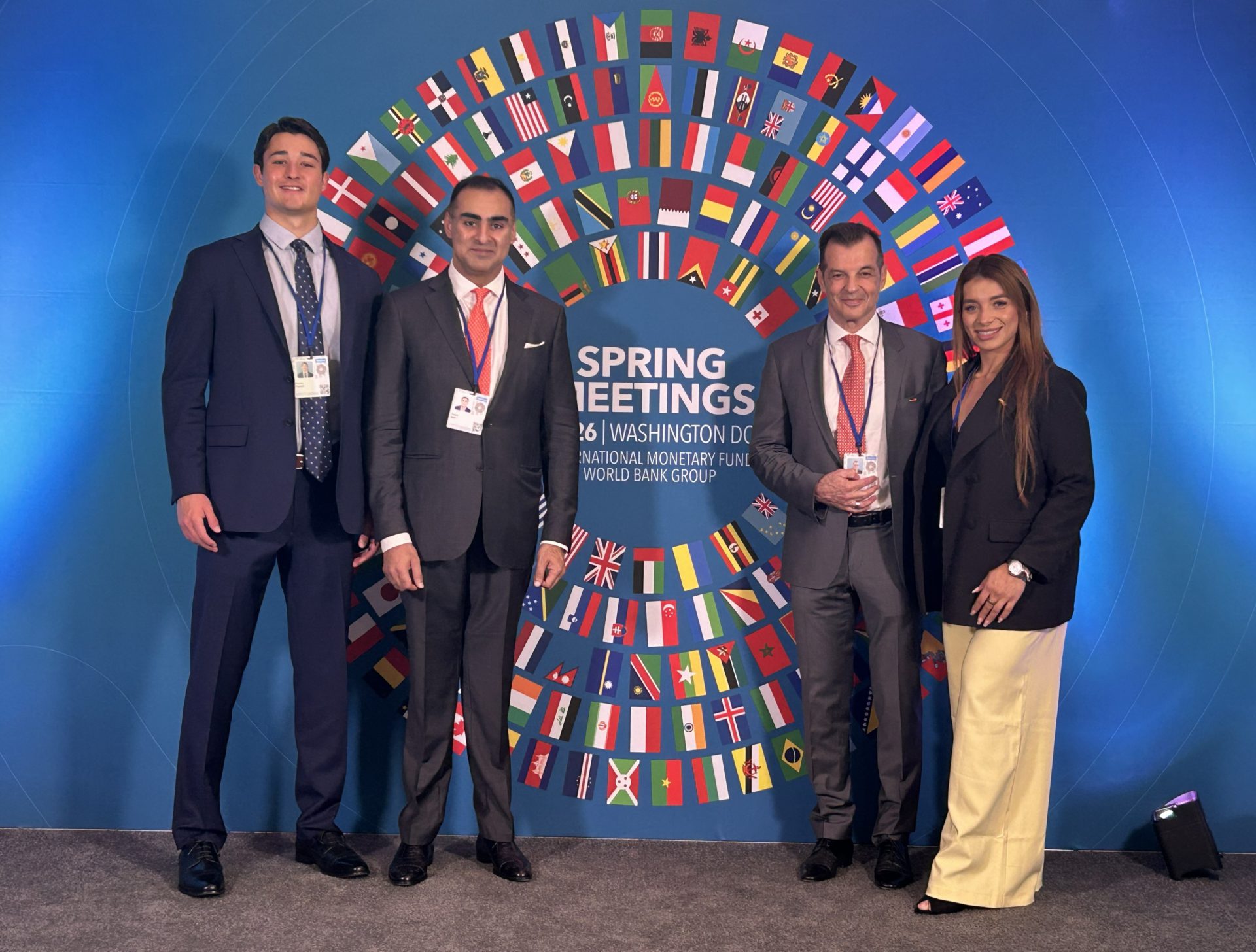
FreeBalance’s delegation for the Spring Meetings. From left to right: Parker Farnell (Regional Sales Manager),
Taimur Malik (Director of International Business), Manuel Schiappa Pietra (President and CEO)
and Valeria Reinoso (Strategic Communication Assistant).
The Rise of Digital Sovereignty & Tech Diplomacy
Perhaps the most provocative theme to emerge this year was the concept of digital sovereignty. Governments are increasingly wary of “black box” solutions and external control over their most sensitive infrastructure. In our discussions with leaders from nations around the world, the conversation shifted from simple IT procurement to tech diplomacy.
This movement toward a “Digital Fort Knox” involves governments defining the rules, regulations, and ethics governing their national data. We are seeing the rise of a new role of Tech Ambassador, positioned above standard IT to navigate the impact of disruptive technologies on national labour, social structures, and sovereignty. Furthermore, as quantum computing moves from theory to reality, forward-thinking finance leaders are already looking to “quantum-ready” security to protect national systems from future encryption threats.
AI Readiness: It’s All About the Data
While the “hype” surrounding AI was palpable in Washington, the discussions FreeBalance participated in were grounded in technical realism. There is a clear recognition that the value of AI is intrinsically linked to the quality of the underlying data.
Governments are looking for “Agentic AI” that can operate across the full PFM cycle and support civil servants with anomaly detection, forecasting, and decision support. But the risks of working with external, private sector and often international entities are keenly felt. To maintain control, there is significant interest in sovereign language models (SLMs). These allow a nation to process its administrative intelligence locally, ensuring that sensitive fiscal data isn’t processed or controlled by third-party entities.
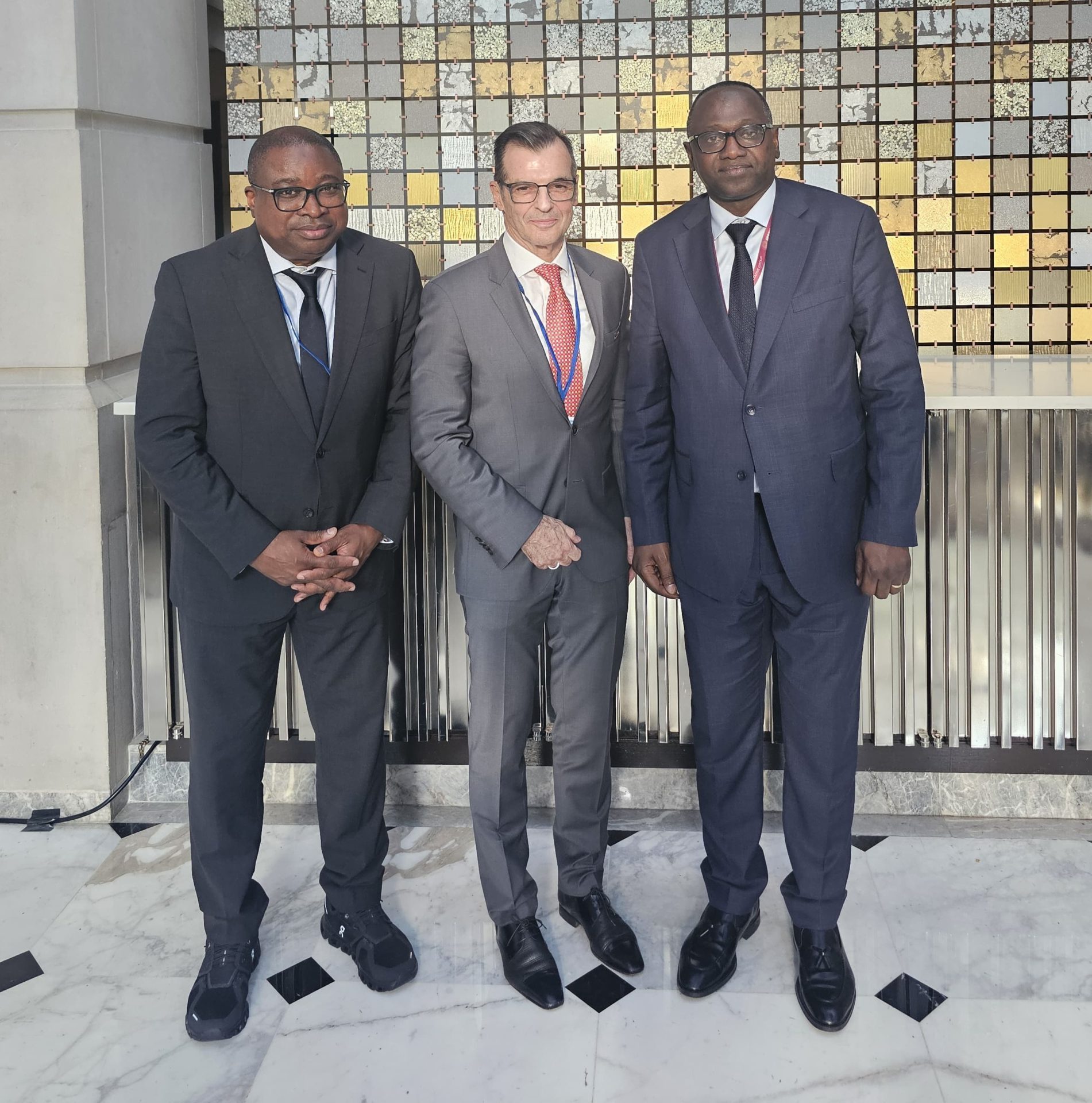
From left to right: Ibrahim Stevens (Governor of the Bank of Sierra Leone),
Manuel Schiappa Pietra (President and CEO, FreeBalance),
Sheku A. F. Bangura (Minister of Finance, Government of Sierra Leone).
The Human Element: Addressing the Capability Gap
While the technology discussed was cutting-edge, many Finance Ministers were refreshingly candid about a persistent challenge: the “skills gap”. Modernization is often hindered not by a lack of budget, but by a “paralysis” caused by legacy mindsets and a fear of data analytics.
The consensus among leaders from nations we engaged with is that technology alone isn’t a silver bullet. To truly bridge this gap, the industry must shift toward:
-
- Deep partnership models: Governments are moving away from simple vendor-purchaser transactions in favour of embedded, on-the-ground support.
-
- The “leapfrog” strategy: Rather than undergoing a painful, total system overhaul, many nations are opting to “leapfrog” by leveraging existing infrastructure and integrating modern modules to achieve rapid results without operational downtime.
Creating A Shared Vision for the Digital State
The 2026 Spring Meetings confirmed that, while the geographies of our discussants varied from the Pacific Islands to the heart of the Balkans, the priorities of the modern Finance Minister are remarkably aligned.
The era of “black box” technology is ending. In its place is a new vision for governance: one defined by digital sovereignty, where the state maintains control of its own data; transparence fiscale, where real-time dashboards take the guesswork out of policy; and resilient integration, where a single source of truth allows for agile execution in an unpredictable world.
Our takeaway from Washington is clear: the most successful nations won’t just be those with the largest budgets, but those with the digital foresight to treat their financial systems as the essential backbone of national sovereignty.
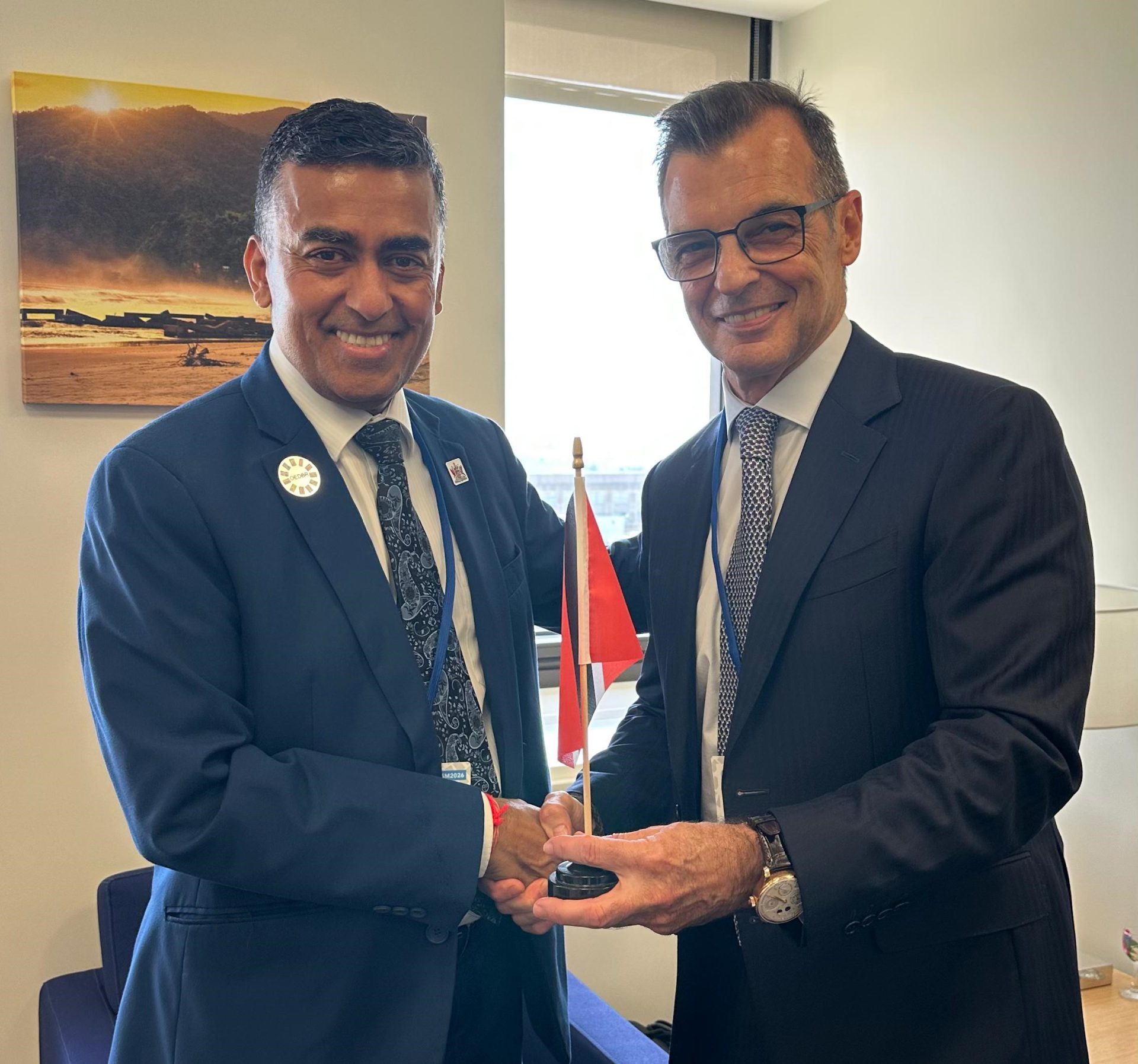
From left to right: Trinidad and Tobago’s Minister of Finance, Davendranath Tancoo,
with Manuel Schiappa Pietra (President and CEO, FreeBalance).
Is your organization ready to face these PFM challenges? To find out how FreeBalance can help, get in touch with one of our PFM experts.